Kirkman Magnesium Bisglycinate Buffered Chelate product packaging

Image: NIH Office of Dietary Supplements, Dietary Supplement Label DatabaseNo separate image reuse license stated

Kirkman

Magnesium Bisglycinate Buffered Chelate

Capsule

Serving size2 Capsule(s)
Servings per containerNot listed
Package180 Capsule(s)
Data retrievedJul 28, 2026

Checking your goal…

Checking with your list…

1 labeled serving/day preview
Open the complete check →

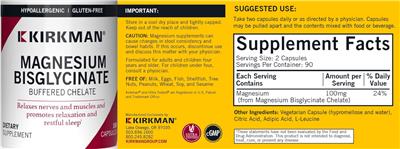
Supplement Facts

Serving size 2 Capsule(s)

Magnesium100 mg24% DV

Other ingredients

Hypromellose; Water; Citric Acid; Adipic Acid; L-Leucine
Label directions

Suggested use:Take two capsules daily or as directed by a physician. Capsules may be pulled apart and the other contents mixed with food or beverage.

Label warnings

Keep out of the reach of children. Caution: Magnesium supplements can cause changes in stool consistency and bowel habits. If it occurs discontinue use and discuss this matter with your physician. Formulated for adults and children four years and older. For children under four consult a physician.
Identity and label version

NIH label record333007
Entered into NIH DSLDAug 22, 2025
UPC / GTINNot listed
Manufacturer / distributor on labelKirkman
Market statusOn market in the source data
“Entered into NIH DSLD” is the database entry date for this label record. It is not a manufacturer launch date or a label effective date.

NIH label history (1)

Current labelNIH record 333007Entered Aug 22, 2025
Serving size2 Capsule(s)
Formula versionf8a7ff32
Ingredients on label1
NIH sourceOpen label ↗
Magnesium100 mg

Label warning: Keep out of the reach of children. Caution: Magnesium supplements can cause changes in stool consistency and bowel habits. If it occurs discontinue use and discuss this matter with your physician. Formulated for adults and children four years and older. For children under four consult a physician.
Sources and traceability

  • NIH Dietary Supplement Label DatabaseData retrieved Jul 28, 2026
    Open source ↗

More from Kirkman

Data comes from product labels or official public sources. It does not mean Safmira, NIH, or FDA approves, certifies, or recommends this product. Label amounts are not laboratory measurements.