Quick Facts
- Prep Time: 5 to 10 minutes total
- Texture Profile: Thick, spoonable, and ice-cream-like consistency
- Key Secret: Frozen zucchini for added volume without the extra sugar
- Nutritionist's Choice: Avocado for healthy fats and long-term satiety
- Recommended Topping: Grain-free homemade cacao granola topping for mineral density
- Market Growth: The global smoothie bowls market was valued at approximately $1.9 billion in 2024, showing a massive shift toward plant-based wellness.
A balanced green smoothie bowl utilizes leafy greens like spinach combined with frozen banana or mango to create a thick, ice-cream-like consistency. Incorporating nutritional therapist recommended green smoothie ingredients such as matcha and pear provides antioxidants and natural sweetness, while using a high-speed blender with minimal nut milk ensures a creamy, spoonable base suitable for various toppings. This approach creates a balanced vegan breakfast bowl that supports metabolic health and sustained energy levels throughout the morning.
The Anatomy of a Nutrient-Dense Base
When constructing a green smoothie bowl, the goal is to maximize nutrient density while maintaining a low glycemic load. Many commercial versions are essentially fruit purees that can cause a rapid spike in blood sugar. To avoid this, I recommend the hidden veg strategy. By using frozen zucchini—or courgette—you add significant volume and dietary fiber without altering the flavor profile or adding excess fructose.
Leafy greens are the undisputed stars of this meal. According to the Centers for Disease Control and Prevention's nutrient density rankings, leafy green vegetables dominate the 'Powerhouse' food category, with the top 15 highest-scoring items all being green. These plants are rich in chlorophyll and essential micronutrients like Vitamin K and folate. When combined with plant-based antioxidants found in green tea powder or fresh pear, you create a powerful defense against oxidative stress.
For the best frozen fruits for creamy smoothie bowl base, I typically suggest a mix of frozen mango and half a frozen banana. Mango provides a silky texture and a rich source of Vitamin C, while the banana offers resistant starch, which serves as a prebiotic for your gut microbiome. If you are looking for a low sugar green smoothie bowl for weight management, you can swap the banana for extra frozen cauliflower or avocado to maintain that creamy mouthfeel without the sugar content.
Choosing Your Greens
- Spinach: Mild flavor, high in iron and magnesium.
- Kale: Earthier taste, exceptional Vitamin C and Vitamin A content.
- Swiss Chard: Salty undertone, excellent for electrolyte balance.
The Sweetness Factor
To keep the bowl balanced, use fruits with a moderate glycemic index. A firm pear adds a delicate sweetness and a gritty fiber texture that pairs beautifully with leafy greens. Avoid adding fruit juices, as a study published in Frontiers in Nutrition found that smoothie consumers reported lower rates of chronic diseases, including hypertension at 19% and diabetes at 8%, compared to those who primarily consumed juice.
Master the Texture: Spoons Over Straws
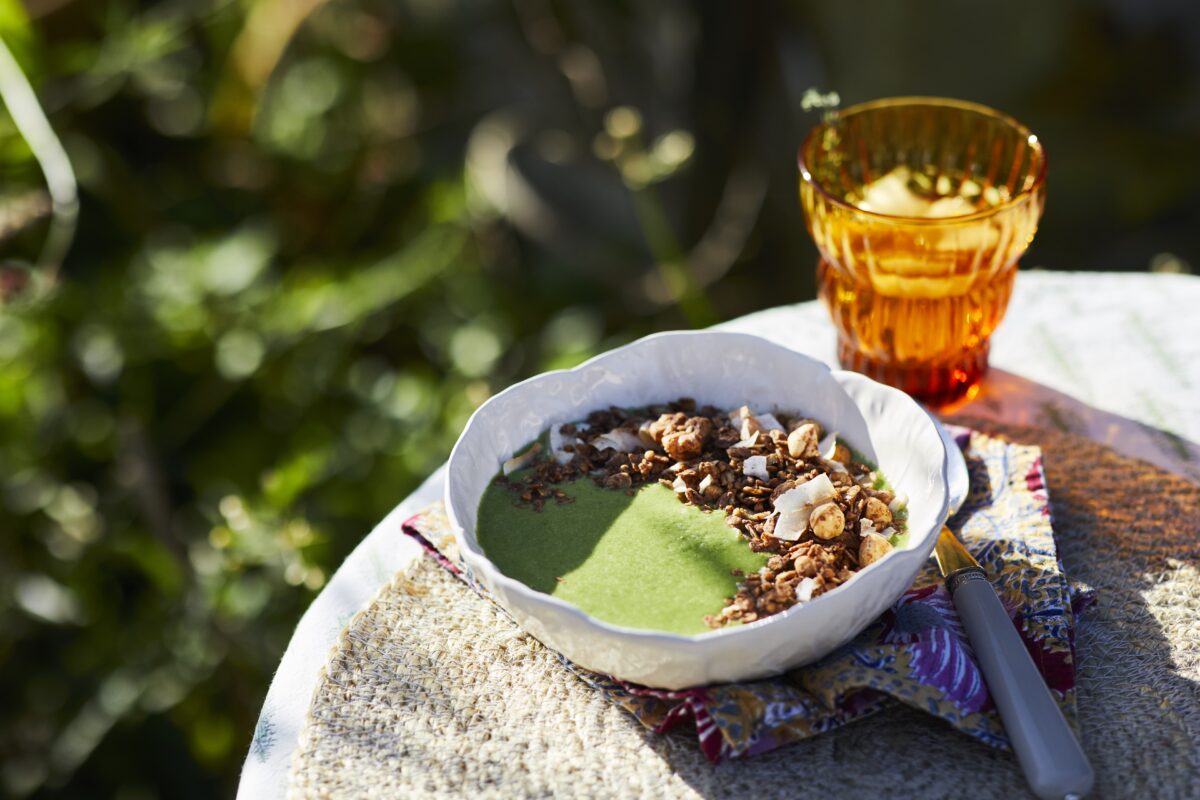
The most common mistake people make when transitioning from a traditional smoothie to a green smoothie bowl is adding too much liquid. The objective is a thick, spoonable texture that mimics soft-serve ice cream. Achieving this requires a specific frozen-to-liquid ratio. Start with about one-third of a cup of unsweetened almond or cashew milk for every two cups of frozen ingredients.
Using a high-speed blender equipped with a tamper is the most effective way to process these dense materials. The tamper allows you to push the frozen fruit into the blades without adding more liquid, which prevents the mixture from becoming a watery soup. If you do not have a high-speed blender, a food processor is often a better alternative than a standard upright blender, as the wider base handles thick mixtures more efficiently.
Natural thickeners play a dual role by improving texture and enhancing the nutritional profile. I often suggest adding a quarter of an avocado or a tablespoon of silken tofu. These ingredients introduce healthy fats and protein, which are critical for blood sugar stability and delayed gastric emptying. This ensures that the energy from your green smoothie bowl is released slowly over several hours, preventing the mid-morning energy crash.
Troubleshooting Texture
- Too Watery: Add more frozen zucchini or a tablespoon of chia seeds and let it sit for two minutes to absorb moisture.
- Too Chunky: Increase the blender speed gradually and use the tamper vigorously; only add liquid one teaspoon at a time.
- Grainy: Ensure your leafy greens are blended with the liquid first before adding the heavy frozen fruit to ensure a completely smooth green smoothie bowl base.
The Perfect Crunch: Homemade Cacao Granola Topping
A bowl is only as good as its toppings. While the base provides the micronutrients, the toppings provide the structural integrity and satiety factors. I always recommend a homemade cacao granola topping to add essential fiber and a satisfying crunch. Commercial granolas are often laden with refined oils and syrups, but a homemade version allows you to control the quality of fats and the level of sweetness.
Raw cacao is a nutritional powerhouse, providing more antioxidants than almost any other food. It is particularly high in magnesium, which supports muscle relaxation and nerve function. When you combine raw cacao nibs with buckwheat groats and walnuts, you create a mineral-dense topping that supports post-workout recovery and cognitive focus.
Cacao Granola Recipe
- Pre-heat your oven to 350°F (175°C).
- Mix two cups of raw buckwheat groats with one cup of chopped walnuts and half a cup of pumpkin seeds.
- Stir in three tablespoons of raw cacao powder, a pinch of sea salt, and two tablespoons of melted coconut oil or tahini.
- Spread the mixture on a baking sheet and bake for 15 minutes.
- Nutritionist's Tip: Drop the temperature to 250°F (120°C) for the final 10 minutes to ensure the granola gets perfectly crisp without burning the delicate polyphenols in the cacao.
To maximize the protein content of your meal, consider high protein vegan green smoothie bowl toppings such as hemp seeds or a sprinkle of pumpkin seeds. Hemp seeds are a complete plant-based protein, meaning they contain all nine essential amino acids. For those who need an extra boost, stirring a scoop of pea or rice protein powder into the base before blending is an excellent strategy for muscle maintenance.
Nutritional Therapist's Logic: Why Fat Matters
It may seem counterintuitive to add fat to a fruit and vegetable bowl, but from a biochemical perspective, it is essential. Many of the vitamins found in leafy greens—specifically Vitamins A, K, and E—are fat-soluble. Without a source of healthy fats like tahini, nut butter, or avocado, your body cannot efficiently absorb these nutrients. Furthermore, fat triggers the release of cholecystokinin (CCK), a hormone that signals to your brain that you are full. By including these fats, you transform a light snack into a functional, satiating meal.
FAQ
What are the health benefits of a green smoothie bowl?
A green smoothie bowl offers a concentrated dose of phytonutrients, fiber, and antioxidants that support heart health and digestion. By using whole fruits and vegetables rather than just juice, you retain the fiber necessary for gut health and stable energy levels. The inclusion of leafy greens provides high levels of Vitamin K and folate, which are vital for bone health and cellular repair.
How do I make my green smoothie bowl thicker?
To achieve a thick consistency, you must prioritize frozen ingredients over fresh ones and strictly limit the amount of added liquid. Using a high-speed blender with a tamper allows you to process frozen fruit with very little liquid. Additionally, adding natural thickeners like frozen cauliflower, avocado, or chia seeds can help create a dense, spoonable texture that doesn't melt quickly.
What are the best toppings for a green smoothie bowl?
The best toppings are those that provide a balance of protein, healthy fats, and texture. I recommend a mix of homemade cacao granola for crunch, hemp seeds for complete protein, and fresh berries for additional antioxidants. Nut butters like almond or cashew butter are also excellent for adding creamy healthy fats that promote satiety.
Are green smoothie bowls actually healthy?
They are extremely healthy when balanced correctly, but they can become sugar-heavy if made solely with fruit. A nutritionist-approved bowl should always include a significant portion of vegetables (like spinach and zucchini) and a source of protein and fat to prevent blood sugar spikes. When these elements are present, they are an excellent way to meet your daily recommended intake of greens.
How do I prevent my green smoothie bowl from being too watery?
Preventing a watery bowl starts with the order of blending. Blend your greens with a tiny splash of liquid first to get them smooth, then add your frozen fruit last. Use only enough liquid to get the blades moving. If the mixture looks too thin, add more frozen banana or a handful of ice cubes to bring the temperature down and increase the viscosity immediately.