Quick Facts
- Prep Time: 10 minutes
- Cook Time: 20 minutes
- Dietary Profile: Vegan, Gluten-Free, Nut-Free option available
- Key Nutrients: High in Vitamin K, Vitamin C, and Dietary Fiber
- Shelf Life: 4 to 5 days when refrigerated in an airtight container
- Texture Hack: Massaging leaves for 1 to 2 minutes removes bitterness effectively
- Caloric Density: High satiety with low-to-moderate calorie count per serving
To prepare a nutritious winter kale salad in 30 minutes, simultaneously cook quinoa and chop seasonal ingredients like apples, walnuts, and avocado. Prepare an emulsified vinaigrette using olive oil, apple cider vinegar, and Dijon mustard to tie the flavors together. Combining protein-rich butter beans or roasted sweet potatoes ensures a satisfying, plant-based meal that is both filling and antioxidant-rich.
The Efficiency Workflow: How to Hit 30 Minutes
In the world of nutrition and meal planning, the biggest barrier to healthy eating is rarely a lack of desire—it is a lack of time. As an editor, I always look for ways to streamline prep without sacrificing the nutritional profile of the meal. The secret to a successful 30-minute healthy winter recipes routine is parallel processing. Instead of performing tasks linearly, you must treat your kitchen like a laboratory where multiple reactions occur at once.
The first step is to get your grains or starches moving. If you are following a kale and quinoa salad recipe, the quinoa requires roughly 15 minutes of simmering and 5 minutes of resting. By starting the stovetop work immediately, you create a window of time to handle the more labor-intensive produce. While the grains absorb water, you can focus on the cruciferous vegetables that form the base of your bowl.
If you find yourself in an absolute rush, there is an ultra-fast alternative: use pre-cooked, frozen quinoa or canned beans. This reduces your active time to roughly 17 minutes. However, for the best texture and flavor, cooking grains fresh and spreading them on a baking sheet to cool for 5 minutes prevents the salad from becoming soggy. This workflow ensures the seasonal produce remains crisp while the plant-based protein provides the necessary satiety to keep you full until your next meal.
| Time Marker | Primary Task | Parallel Task |
|---|---|---|
| 0 - 5 Min | Rinse quinoa and start boiling | Pre-heat oven for sweet potatoes (if using) |
| 5 - 15 Min | Wash and de-stem kale | Whisk together the apple cider vinegar dressing |
| 15 - 20 Min | Massage the kale with oil/salt | Chop apples, walnuts, and avocado |
| 20 - 25 Min | Fluff grains and let cool | Toast walnuts in a dry pan for 2 minutes |
| 25 - 30 Min | Combine all ingredients | Final seasoning and plating |
Texture Transformation: Massaging vs. Steaming
One of the most frequent complaints I hear about Winter Kale Salad is that the leaves are too tough or "leafy." This is a valid nutritional concern because kale contains a complex structure of cellulose that can be difficult for the human digestive system to break down without assistance. Massaging kale with an acidic dressing for just one to two minutes helps break down the plant's tough cellulose structure, significantly improving the salad's texture and digestibility.
To execute the perfect massage, place your chopped leaves in a large bowl with a teaspoon of olive oil and a pinch of sea salt. Use your hands to firmly squeeze and rub the leaves. You will notice a physical transformation: the volume of the greens will shrink by nearly half, and the color will shift to a vibrant, dark emerald. This process not only makes the greens tender but also removes the overwhelming bitterness often associated with raw cruciferous vegetables.
If the idea of handling your food doesn't appeal to you, the 45-second steam hack is a professional alternative. Simply place the kale in a steamer basket over boiling water for less than a minute. This "blanching" effect softens the fiber without cooking out the heat-sensitive nutrients. For most 30-minute healthy winter recipes, I recommend using Lacinato kale (also known as Dinosaur kale). It has a flatter leaf structure than curly kale, making it easier to massage and more pleasant to eat in a salad format.
The Winter Flavor Matrix: Ingredients & Customization
The beauty of a Winter Kale Salad lies in the balance of contrasting flavors and textures. In the winter months, we naturally crave heartier fare, but we still need the micronutrients found in fresh produce. Interestingly, kale is a hardy winter vegetable whose flavor often sweetens after exposure to frost as the cold temperatures trigger the plant to convert starches into glucose. This natural sweetness pairs perfectly with the tartness of seasonal fruits.
When building your bowl, aim for a mix of earthy, sweet, creamy, and crunchy elements. This diversity is not just for your palate; it ensures a wide spectrum of phytonutrients. For instance, one cup of raw kale provides approximately 68% of the daily value for vitamin K and 22% for vitamin C, making it one of the most nutrient-dense leafy greens available. Adding pomegranate seeds provides a burst of antioxidant-rich juice, while roasted sweet potatoes add complex carbohydrates for sustained energy.
The dressing is the final "glue" of the recipe. I always recommend an emulsified vinaigrette. A mixture of apple cider vinegar, Dijon mustard, and a touch of maple syrup creates a flavor profile that cuts through the density of the greens. The healthy fats in the dressing and the avocado are essential because they increase the bioavailability of the fat-soluble vitamins (A, K, and E) found in the kale.
| Component | Top Recommendations | Nutritional Highlight |
|---|---|---|
| The Base | Lacinato or Curly Kale | High dietary fiber |
| The Protein | Quinoa, Butter Beans, or Chickpeas | Essential amino acids |
| The Sweet | Fuji Apples or Pomegranate Seeds | Vitamin C boost |
| The Crunch | Toasted Walnuts or Pepitas | Omega-3 fatty acids |
| The Creamy | Sliced Avocado or Goat Cheese | Satiety-inducing fats |
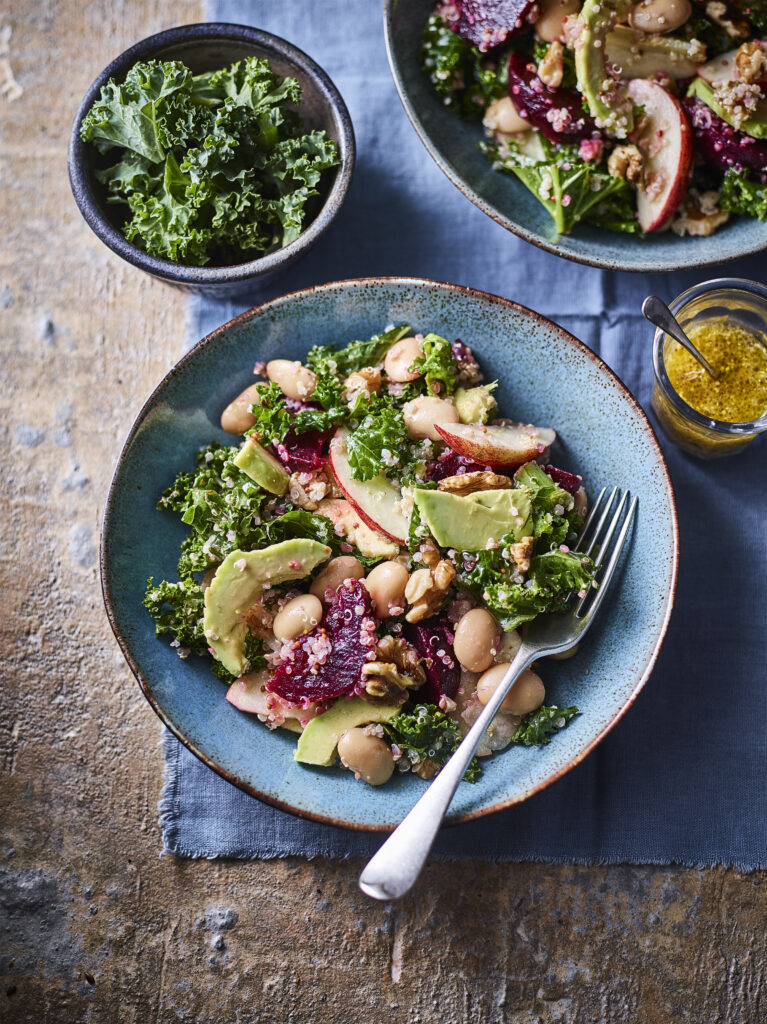
This nutritious winter kale salad with apples and walnuts is a prime example of how to layer these components for maximum impact. The bitterness of the greens is neutralized by the apple cider vinegar, while the walnuts provide a textural counterpoint to the soft, massaged leaves.
Meal Prep Mastery: Storage and Longevity
One of the reasons I frequently advocate for a kale and quinoa salad recipe in my columns is its incredible resilience. Unlike spinach or arugula, which wilt within hours of being dressed, kale actually improves after sitting in a vinaigrette. This makes kale and quinoa winter salad meal prep a favorite strategy for busy professionals who want to cook once and eat for several days.
When considering how to store massaged kale salad, the key is moisture management. If you have already massaged the kale with oil and vinegar, it can safely stay in an airtight container in the refrigerator for up to 4 days. In fact, many people find the flavor is better on day two because the dressing has had more time to penetrate the fibers of the superfood ingredients.
However, to maintain the best quality, I suggest keeping your "crunchy" toppings separate. Ingredients like toasted walnuts or pomegranate seeds can lose their distinct texture if they sit in the moisture of the salad for too long. Store these in a small separate jar and sprinkle them on just before serving. If you are adding avocado, wait to slice it until the moment you are ready to eat to prevent browning. By following these storage steps, you ensure that your easy 30-minute winter kale salad remains as vibrant and delicious on Thursday as it was on Sunday.
FAQ
How do you soften kale for a salad?
The most effective way to soften kale is by massaging it with a small amount of oil, salt, or an acidic dressing for 1 to 2 minutes. This mechanical action breaks down the tough cellulose fibers. Alternatively, you can give the kale a quick 45-second steam or let it marinate in an acidic dressing for at least 30 minutes before eating.
Should I massage kale before making a salad?
Yes, massaging kale is highly recommended for raw applications. Without this step, the leaves can be very fibrous and difficult to chew, which often leads to a negative experience with the vegetable. Massaging also helps the leaves absorb the flavors of the dressing more effectively, leading to a more cohesive dish.
How long does winter kale salad last in the fridge?
Because kale is a very hardy cruciferous vegetable, a dressed kale salad can last for 4 to 5 days in the refrigerator. This is significantly longer than traditional lettuce-based salads. However, for optimal freshness, it is best consumed within 3 days.
Can you make kale salad the night before?
Absolutely. Making kale salad the night before is actually a pro-tip. The extra time allows the dressing to further tenderize the greens and allows the flavors of the seasonal produce and grains to meld together. Just remember to add nuts or seeds right before serving to keep them crunchy.
How do you make kale taste less bitter?
To remove bitterness from kale salad, focus on three things: massaging the leaves, removing the tough center stems, and using a balanced dressing. Acidic ingredients like apple cider vinegar or lemon juice neutralize the bitter compounds, while a touch of sweetness from maple syrup or honey can provide a flavor balance that makes the greens much more palatable.