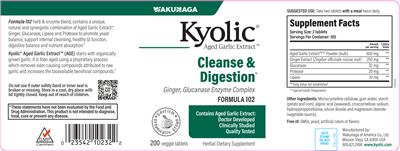
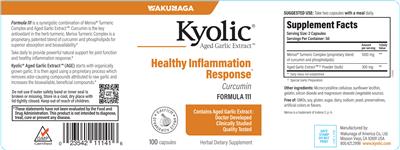
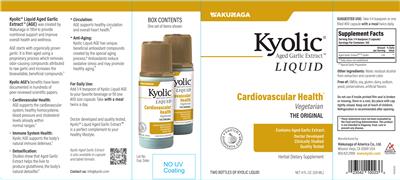
Kyolic Kyolic Liquid The Original product packaging

Image: NIH Office of Dietary Supplements, Dietary Supplement Label DatabaseNo separate image reuse license stated

Kyolic

Kyolic Liquid The Original

Liquid

Serving size0.25 Teaspoon(s) [1 capsule]
Servings per containerNot listed
Package4 Fluid Ounce(s); 120 mL
Data retrievedJul 28, 2026

Checking your goal…

Checking with your list…

1 labeled serving/day preview
Open the complete check →

Supplement Facts

Serving size 0.25 Teaspoon(s) [1 capsule]

Aged Garlic Bulb Extract1 mLDV not established

Other ingredients

Water; Alcohol; Caramel
Label directions

For daily use:Add 1/4 teaspoon of Kyolic Liquid AGE to your favorite beverage or fill one #00 size capsule. Take with a meal twice a day. Suggested use: Take 1/4 teaspoon or one filled #00 capsule with a meal twice daily.

Label warnings

Do not use if inside printed film seal is broken or missing. Keep out of reach of children.

Identity and label version

NIH label record333099
Entered into NIH DSLDJun 25, 2025
UPC / GTIN00023542100236
Manufacturer / distributor on labelWakunaga of America Co. Ltd.
Market statusOn market in the source data
“Entered into NIH DSLD” is the database entry date for this label record. It is not a manufacturer launch date or a label effective date.

NIH label history (2)

Current labelNIH record 333099Entered Jun 25, 2025
Serving size0.25 Teaspoon(s) [1 capsule]
Formula version2fdd3af5
Ingredients on label1
NIH sourceOpen label ↗
Aged Garlic Bulb Extract1 mL

Label warning: Do not use if inside printed film seal is broken or missing. Keep out of reach of children.

Earlier labelNIH record 81011Entered Nov 20, 2017
Serving size0.25 tsp [1 capsule]
Formula versionaf6e853c
Ingredients on label1
NIH sourceOpen label ↗
Aged Garlic extract1 mL

Label warning: Keep out of reach of children. Do not use if inside printed film seal is broken or missing.
Sources and traceability

  • NIH Dietary Supplement Label DatabaseData retrieved Jul 28, 2026
    Open source ↗

More from Kyolic

Data comes from product labels or official public sources. It does not mean Safmira, NIH, or FDA approves, certifies, or recommends this product. Label amounts are not laboratory measurements.