Quick Facts
- Efficiency: A standard 30-minute session burns between 150–250 calories depending on intensity.
- The Pilates Formula: Following the Joseph Pilates method, you will feel a difference in 10 sessions and see a difference in 20.
- Equipment: A 15mm mat is the professional standard to ensure spinal protection during rolling movements.
- Strength Gains: Consistent practice can lead to a 20% increase in abdominal strength over a 12-week period.
- Accessibility: Approximately 67% of individuals who practice yoga now prefer to perform their routines at home.
- Trend Data: In 2023, 51% of exercisers in the United States reported a significant preference for at-home workouts for convenience.
Combining pilates yoga flows offers a balanced approach to fitness by merging core stability with holistic flexibility. While Pilates targets the powerhouse muscles including the deep abdominals and pelvic floor, yoga emphasizes spiritual wellness, joint mobility, and spinal alignment. This integration ensures a well-rounded routine that prevents overutilizing specific muscle groups while enhancing both physical control and mental clarity.
The Philosophy of Fusion: Powerhouse vs. Presence
To master a home routine, one must understand the distinct physiological objectives of both disciplines. Pilates is fundamentally about the powerhouse—a term coined to describe the center of the body, including the transverse abdominis, obliques, and lower back. The focus here is on muscular control and pelvic floor activation. When you engage in core strength pilates exercises, you are training the nervous system to maintain stability under tension.
Yoga, conversely, prioritizes presence and the mind-body connection. While Pilates is often linear and clinical, yoga utilizes vinyasa transitions to create fluidity. It places a heavy emphasis on spinal alignment and stretching the fascia to improve long-term joint mobility. By merging these two, you create structured home movement sequences that address both the need for strength and the necessity of recovery.
In my years as a training editor, I’ve found that athletes who only lift weights often lack the spinal health required for longevity. Integrating pilates yoga flows into a weekly schedule bridges that gap. You aren’t just stretching; you are building functional strength that carries over into every other athletic pursuit.
| Feature | Pilates Focus | Yoga Focus |
|---|---|---|
| Primary Goal | Core stability and muscular control | Flexibility and spiritual wellness |
| Breathing | Lateral thoracic (into the ribs) | Ujjayi or diaphragmatic (nasal) |
| Movement | Precise, repetitive, and structured | Fluid transitions and sustained holds |
| Core Work | Deep pelvic floor activation | Engagement for balance and posture |
Essential Home Setup: The 15mm Rule & Minimal Gear
One of the most significant barriers to a daily routine is the perceived need for a studio environment. However, recent data shows that as of 2024, roughly 17% of adults in the United States participate in yoga or Pilates as part of their health routine, with the majority utilizing home spaces. The beauty of these disciplines is that they are often a no equipment pilates yoga workout for small spaces.
Pro-Tip: Do not use a standard thin yoga mat for Pilates-heavy flows. Pilates involves significant rolling on the vertebrae (like the "Rolling Like a Ball" exercise). A 15mm mat is critical for providing the cushioning necessary to protect the erector spinae and the bony processes of the spine.
Beyond the mat, your environment should facilitate a mind-body connection. Clear a space that allows you to extend your arms and legs fully in all directions. If you are performing a 15 minute pilates yoga flow for busy mornings, having your mat already unrolled can increase the likelihood of sticking to the habit.
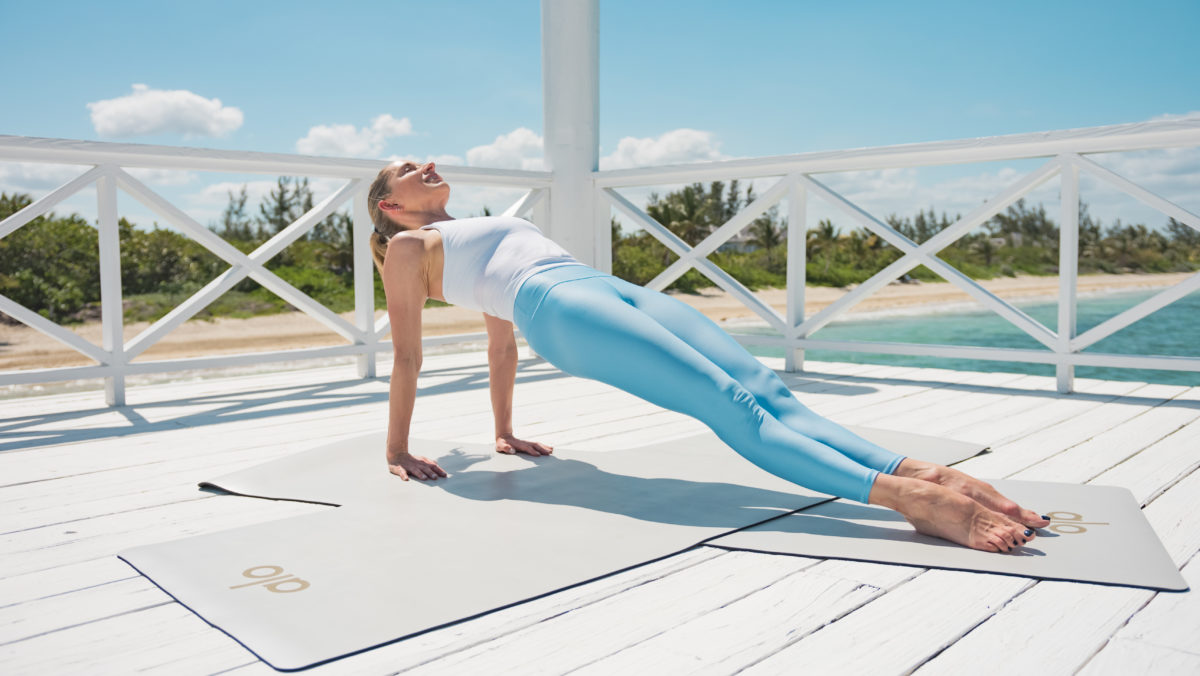
4-Week Roadmap: From Foundation to Flow
Building a sustainable daily routine requires progressive periodization. You cannot jump into advanced vinyasa transitions without foundational stability. This weekly pilates and yoga routine schedule for home is designed to move you from basic mobility to complex, high-intensity sequences.
Week 1: Foundational Mobility
Focus on joint mobility and learning to breathe. The goal is to establish a connection between the breath and pelvic floor activation.
- Focus: Cat-Cow, Bird-Dog, and the Pilates Chest Lift.
- Duration: 20 minutes, 4 times a week.
Week 2: Core Stabilization
Introduce core strength pilates exercises that challenge the rectus abdominis and obliques.
- Focus: The Hundred, Plank variations, and Warrior I to II transitions.
- Duration: 25 minutes, 5 times a week.
Week 3: Functional Flow
Begin combining movements into intermediate pilates yoga flows for home practice progression. This week emphasizes low-impact training with higher heart rate variability.
- Focus: Sun Salutations paired with Side Kick Series.
- Duration: 30 minutes, 5 times a week.
Week 4: Total Body Integration
At this stage, your daily flexibility yoga routines should feel seamless. You are now working on muscle toning and advanced spinal alignment.
- Focus: Teaser, Crow Pose, and Swan Dive.
- Duration: 40 minutes, 6 times a week.
| Week | Goal | Primary Exercises |
|---|---|---|
| 1 | Mobility | Pelvic Tilts, Child's Pose |
| 2 | Stability | Single Leg Stretch, Downward Dog |
| 3 | Strength | Leg Circles, Chaturanga |
| 4 | Flow | Full Vinyasa, Pilates Teaser |
Targeted Routines: Goal-Specific Pilates Yoga Flows
Different days call for different focuses. If you have spent eight hours at a desk, your needs are different than if you just finished a long run. Using targeted pilates yoga flows for posture and back health can reverse the negative effects of a sedentary lifestyle.
For the Office Professional
Focus on the erector spinae and opening the chest.
- The Routine: Start with a standing mountain pose to check spinal alignment. Move into a Pilates Swan Dive to strengthen the back extensors, followed by a yoga Cobra pose to stretch the abdominals. This combination targets the rounded shoulders common in desk workers.
For Morning Energy
When time is tight, a 15 minute pilates yoga flow for busy mornings can jumpstart your metabolism.
- The Routine: Rapid Sun Salutations (Yoga) to build heat, followed immediately by the Pilates Hundred to ignite the core. Finish with a seated twist to aid digestion and wake up the nervous system.
For Deep Recovery
This is about low-impact training and joint mobility.
- The Routine: Focus on Yin Yoga holds (3-5 minutes) for the hips, such as Pigeon Pose, interspersed with Pilates "Saw" to maintain abdominal engagement while stretching the hamstrings.
FAQ
What is the difference between yoga and Pilates?
Yoga is an ancient practice focused on the mind-body connection, flexibility, and spiritual wellness through specific poses and breathwork. Pilates is a 20th-century system designed for physical rehabilitation, focusing heavily on core strength, muscle control, and pelvic floor activation.
Can you combine yoga and Pilates in the same workout?
Yes, combining them is highly effective. You can use yoga for the warm-up and cool-down to maximize joint mobility and use Pilates for the main body of the workout to build abdominal engagement and muscular endurance.
What are the main benefits of a Pilates yoga flow?
The primary benefits include improved spinal alignment, increased core stability, better flexibility, and reduced stress levels. It provides a low-impact training method that tones muscles without putting excessive strain on the joints.
Are Pilates yoga flows suitable for beginners?
Absolutely. Most pilates yoga flows can be modified. Beginners should focus on controlled breathing and basic spinal alignment before attempting advanced vinyasa transitions or complex Pilates moves like the Teaser.
Do I need any equipment for a Pilates yoga workout?
Generally, no. Most routines are a no equipment pilates yoga workout for small spaces. However, a 15mm mat is highly recommended for spinal protection, and some people choose to use yoga blocks or Pilates small balls to assist with certain movements.
How many times a week should I do a Pilates yoga flow?
For noticeable results in muscle toning and flexibility, a frequency of 3 to 5 times per week is ideal. Even a short 15 minute pilates yoga flow for busy mornings can be effective if done consistently.
Ready to Start Your Practice?
The most difficult part of any training program is the first five minutes. The data is clear: home workouts are not just a trend but a shift in how we approach wellness. By integrating pilates yoga flows into your life, you are choosing a path of functional strength and longevity.
Start today. Unroll your mat, focus on your pelvic floor activation, and commit to just one 15-minute sequence. You will feel the difference in your posture and mental clarity immediately. Fitness is not about the hour you spend in the gym; it is about the movement patterns you establish for the rest of your life. Consistent abdominal engagement and spinal health are the foundation of an athletic body. Take that first step toward a stronger powerhouse and a more present mind right now.