Quick Facts
- Success Rate: Between 70% to 90% of patients achieve spontaneous resolution or a positive response to conservative management within one year.
- Prevalence: Lateral epicondylitis affects 1% to 3% of the general population annually, peaking between ages 40 and 60.
- The Comparison: Medial epicondylitis is less common, affecting about 0.4% of people compared to 1.3% for the lateral version.
- Best Treatment: Research shows that progressive loading and eccentric strengthening exercises for elbow tendonitis are scientifically superior to steroid injections for long-term health.
- Recovery Timeline: Most athletes experience initial pain relief within 4 weeks, though full tendon remodeling typically takes 3 to 6 months.
- Key Diagnostic: Pain on the outside of the elbow signifies tennis elbow, while pain on the inner bump indicates golfer's elbow.
Effective elbow tendonitis treatment centers on managing tendon load capacity through progressive strengthening. Recovery strategies for both tennis and golfer's elbow prioritize resisted wrist extension and flexion exercises to stimulate collagen repair and restore athletic performance.
Identifying Your Pain: Tennis vs. Golfer's Elbow
To fix a problem, you first have to define it. Elbow pain is often grouped into a single category, but the mechanics of lateral epicondylitis and medial epicondylitis are distinct. While both are types of repetitive strain injury, they involve different muscle groups and demand specific rehabilitation focuses.
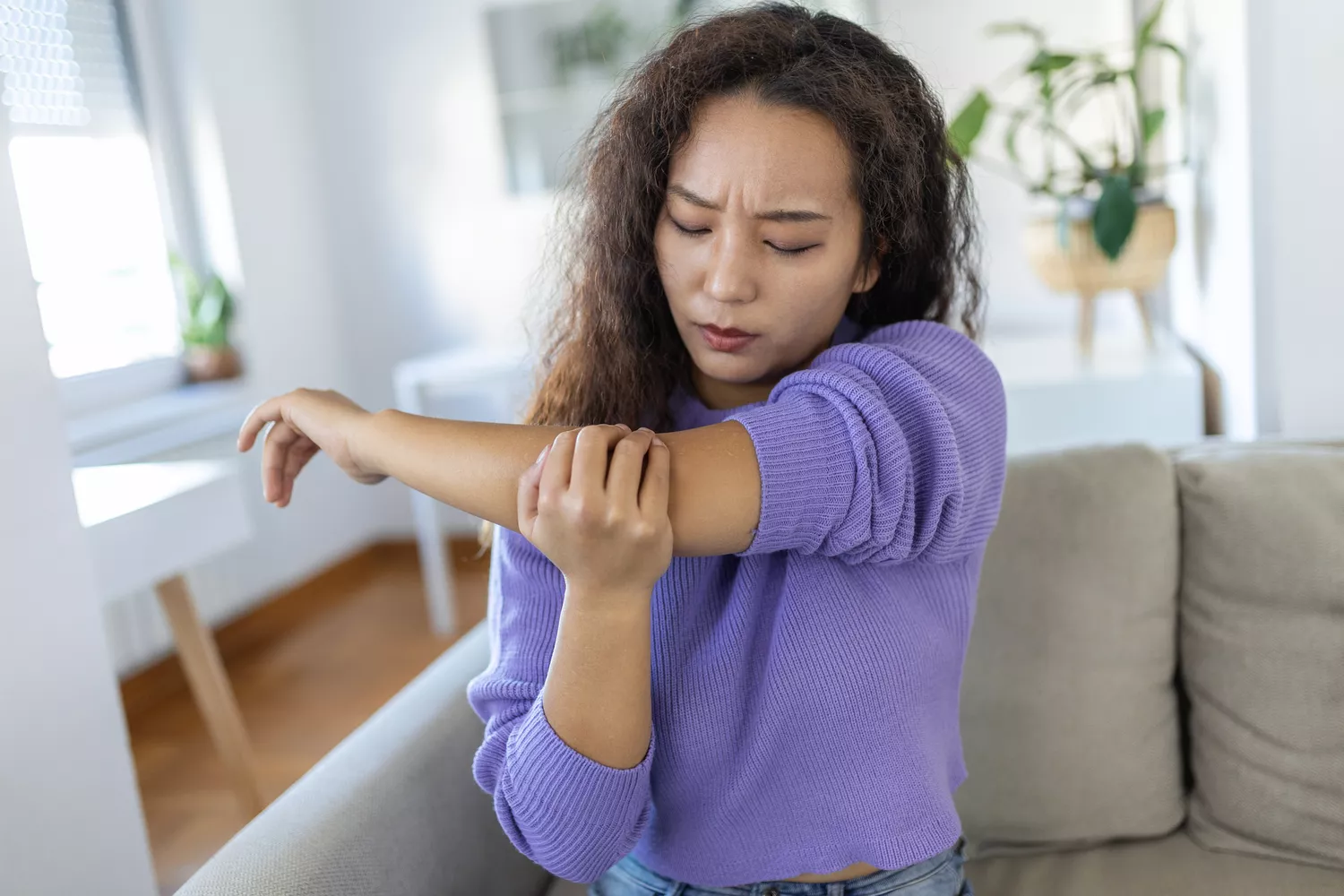
Tennis elbow, or lateral epicondylitis, occurs on the outside of the elbow. This condition primarily involves the extensor carpi radialis brevis tendon. This muscle is responsible for stabilizing the wrist when the elbow is straight—a common requirement in racquet sports or even heavy typing. When this tendon is overloaded, micro-tears occur, leading to pain that radiates down the forearm during lifting or gripping tasks.
On the other side of the joint, golfer's elbow, or medial epicondylitis, affects the inner part of the elbow. This involves the wrist flexors and the pronator teres. You will feel this pain most when performing tasks that require repetitive wrist flexion or pronation, such as swinging a club, manual screwdriving, or heavy pulling movements in the gym.
Understanding how to distinguish between tennis elbow and golfer's elbow is the first step toward choosing the right exercises. If your pain flares up when you pull your hand back (wrist extension), it is likely lateral. If it hurts when you curl your wrist toward your forearm (wrist flexion), it is likely medial.
The 3-Phase Recovery Protocol
As a trainer, I see too many athletes make the mistake of complete rest. Passive rest does not fix tendons; it makes them weaker. To achieve true golfer's elbow recovery, we must use a phased approach that gradually increases the tendon load capacity. Follow this structured roadmap to return to your sport safely.
Phase 1: Pain Management (Weeks 1-2)
The goal here is not to build strength but to settle the nervous system and manage initial inflammation. We use isometric contractions because they have an analgesic (pain-killing) effect on the tendon without the irritation caused by movement.
- The Exercise: Seated wrist holds. Rest your forearm on a table with your palm facing down (for tennis) or up (for golfer's). Use your other hand to lift a light weight into position, then hold it steady for 30 to 45 seconds.
- Dosage: 5 repetitions, twice daily.
- The Rule: Use the 24-hour pain monitoring rule. If your pain is higher than a 3 out of 10 during the exercise, or if it feels worse the next morning, reduce the weight.
Phase 2: Loading for Repair (Weeks 3-8)
Once the sharp pain subsides, we focus on eccentric strengthening exercises for elbow tendonitis. This involves the lengthening phase of a muscle contraction, which is the gold standard for stimulating collagen repair within the tendon.
- Tennis Elbow Focus: Use a light dumbbell. Use your "good" hand to lift the weight into extension, then slowly lower it with the affected hand over a 3-5 second count.
- Golfer's Elbow Focus: Follow the same process but with the palm facing up, focusing on the slow lowering of the wrist from a curled position.
- Dosage: 3 sets of 15 repetitions, performed 3 times per week.
Phase 3: Functional Power (Weeks 8+)
This is where we prepare for a gradual return to sport after elbow tendonitis. We introduce heavy slow resistance and multi-planar movements, such as forearm supination and pronation using a hammer or a loaded gym bar. This phase ensures the tendon can handle the high-velocity loads required in tennis, golf, or weightlifting.
Home Remedies for Elbow Pain & Support
While progressive loading is the engine of recovery, several home remedies for elbow pain can bridge the gap between sessions. These tools don't "cure" the injury, but they create an environment where healing is more comfortable.
First, consider your ergonomics. If you spend eight hours a day at a keyboard with your wrists in a compromised position, no amount of tennis elbow exercises will fully resolve the issue. Adjust your chair height so your elbows are at a 90-degree angle and your wrists remain neutral.
When it comes to physical aids, the best braces and supports for tennis elbow recovery usually involve counterforce bracing. These straps are worn about two inches below the elbow joint. They work by compressing the muscle belly, which changes the angle at which the tendon pulls on the bone, effectively "unloading" the injured site during daily tasks.
For immediate relief, soft tissue mobilization can be helpful. Using a lacrosse ball or your thumb, apply firm pressure to the tight muscles of the forearm—not the painful bone itself. This helps desensitize the area and improves local blood flow. Regarding the age-old question of ice or heat, I generally recommend heat before exercises to improve tissue extensibility and ice after activity if the area feels inflamed. However, keep in mind that neither ice nor heat will contribute to collagen repair as effectively as movement will.
Many athletes also find success with exercises for tennis elbow relief at home using simple household items. A thick rubber band can be used for finger extensions (opening the hand against resistance), which balances the muscles of the forearm and relieves pressure on the common extensor origin.
Treatment Hierarchy: What Actually Works?
When looking for non-surgical elbow tendonitis treatment options, it is important to distinguish between "quick fixes" and long-term solutions. Many patients are offered steroid injections as a first line of defense. While steroids can provide rapid pain relief, studies show a high recurrence rate—often as high as 54% within a year—and they may actually weaken the tendon structure over time.
The following table compares the most common interventions based on clinical outcomes and long-term success.
| Treatment Type | Primary Goal | Success Rate (Long-term) | Recovery Time |
|---|---|---|---|
| Physical Therapy & Loading | Tissue remodeling and strength | 80% - 90% | 3 - 6 Months |
| Counterforce Bracing | Load distribution / Pain relief | Moderate (as an adjunct) | Immediate (symptom management) |
| Shockwave Therapy | Stimulating healing in chronic cases | 60% - 75% | 2 - 4 Months |
| Corticosteroid Injections | Inflammation and pain reduction | Low (high recurrence) | 1 - 2 Weeks (temporary) |
| Surgery (Tenotomy) | Removing damaged tissue | High (for refractory cases) | 6 - 12 Months |
For most individuals, the path to a full recovery time for golfer's elbow treatment involves staying consistent with physical therapy. Surgery is rarely necessary and should only be considered after at least six months of failed conservative management.
FAQ
What is the fastest way to heal elbow tendonitis?
The fastest way to heal is not through total rest, but through a structured progressive loading program. By combining isometric holds for pain management with eccentric exercises to stimulate collagen repair, you can typically see significant improvement within 4 to 8 weeks. Avoid aggressive stretching or "pushing through" sharp pain, as this usually resets the healing clock.
How do I know if my elbow pain is tendonitis?
Elbow tendonitis usually presents as a dull ache that turns into sharp pain during specific movements like gripping, lifting a coffee cup, or turning a doorknob. If the pain is localized to the bony bumps on the side of your elbow and feels tender to the touch, it is likely tendonitis. If you experience numbness or tingling in your fingers, you may be dealing with nerve compression instead.
Should I use ice or heat for elbow tendonitis?
Use heat before you perform your rehabilitation exercises to increase blood flow and make the tendons more pliable. Use ice after activity or at the end of the day if you are experiencing significant swelling or sharp, throbbing pain. For chronic cases, heat is generally more beneficial for long-term recovery than ice.
Is wearing a brace effective for elbow tendonitis?
Yes, wearing a counterforce brace can be very effective for managing symptoms during daily activities. By applying pressure to the forearm muscles, the brace reduces the tension placed on the tendon's attachment point at the elbow. However, a brace is a management tool, not a cure; it must be used in conjunction with strengthening exercises to resolve the underlying weakness.
How long does it take for elbow tendonitis to heal?
While minor flare-ups may settle in a few weeks, true tendon remodeling usually takes 3 to 6 months. Tendons have a lower blood supply than muscles, which means they heal more slowly. Consistency with your exercise protocol during this window is the most important factor in preventing the injury from becoming chronic.
What is the difference between tennis elbow and golfer's elbow?
The difference lies in the location and the muscles involved. Tennis elbow (lateral epicondylitis) occurs on the outside of the elbow and is caused by overuse of the wrist extensors. Golfer's elbow (medial epicondylitis) occurs on the inside of the elbow and results from overuse of the wrist flexors. Both are strain injuries, but they require opposite movement patterns for rehabilitation.