Quick Facts
- The 11% Factor: Research indicates that 11% of individuals avoid fitness facilities entirely due to anxiety over poor etiquette and gym intimidation.
- Sanitation Standard: To effectively eliminate pathogens, athletes should use a sanitizing spray containing at least 60% alcohol or specialized antibacterial wipes provided by the facility.
- Sharing Limit: During peak gym hours, limit your time on a single piece of cardio or strength equipment to 15-20 minutes if others are waiting.
- Social Contract: Proper gym etiquette requires wiping down all equipment, including benches and machines, immediately after use while ensuring weights are returned to their correct racks.
- Hygiene Priority: According to data, 30% of respondents cite the failure to wipe down equipment as their primary grievance in shared fitness spaces.
Gym intimidation is real, but mastering gym etiquette can boost your confidence and help you focus on your performance. Whether it is your gym etiquette for beginners first day or you are a seasoned pro, following these rules ensures a smooth workout flow for everyone. Proper gym etiquette involves wiping down equipment after use, re-racking weights, and respecting personal space to maintain a professional workout flow for all members.
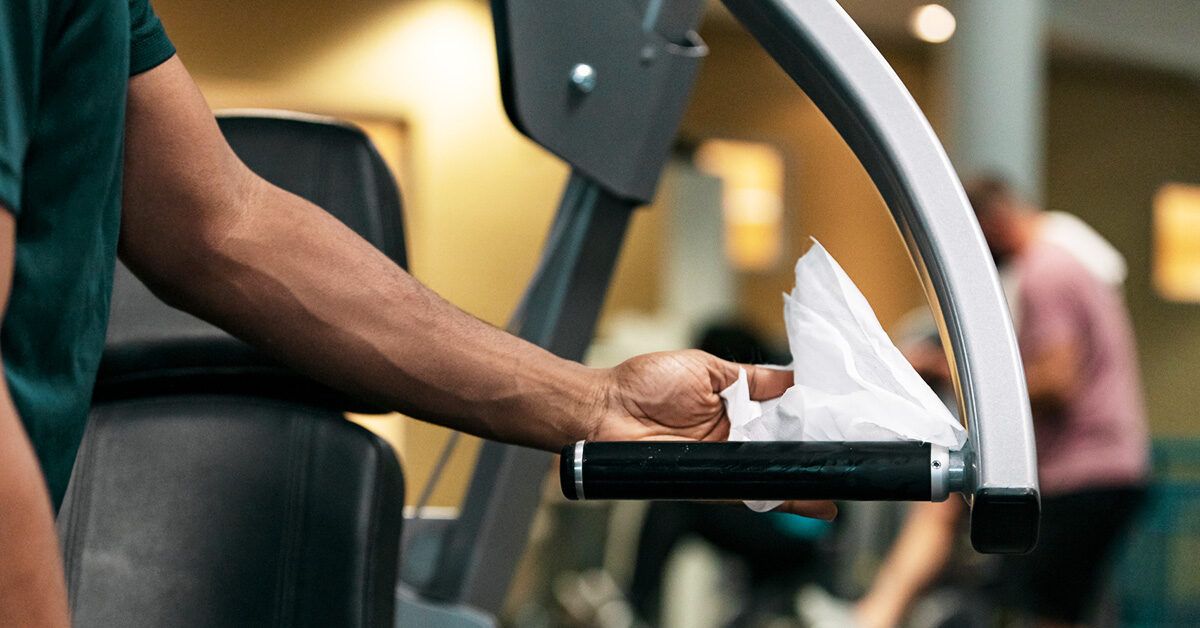
1. The Golden Rule of Hygiene: Wipe It Down
As a training editor, I have seen every type of workout environment, from high-end performance centers to gritty garage gyms. The common thread that keeps a facility functional is hygiene. Hygiene and cleaning techniques are not just about politeness; they are about public health. Shared surfaces are breeding grounds for bacteria, and maintaining a clean station is a sign of a disciplined athlete.
One of the best gym hygiene tips I give my clients is the two-towel rule. You carry one personal towel to use as a barrier between your body and the equipment, and you use a second set of antibacterial wipes or a dedicated shop towel with sanitizing spray to clean the machine after your sets. This prevents the spread of skin infections like Staph or Ringworm, which can easily bench an athlete for weeks.
Statistics show that nearly 26% of gym-goers admit they do not sanitize equipment after using it, despite poor hygiene being ranked as a top irritation for other members. If you want to maintain your workout flow without contributing to this problem, make cleaning an automatic part of your rest period or transition.
| Feature | Do | Don't |
|---|---|---|
| Sanitizing | Use facility-provided spray on all touchpoints. | Leave a puddle of sweat on a bench or seat. |
| Towels | Bring essential gym hygiene tips for personal towels into practice by using them as a barrier. | Use your personal towel to wipe down the machine (use wipes instead). |
| Timing | Wipe down the equipment the moment you finish your last set. | Walk away to grab water before cleaning your station. |
2. Resource Sharing: The Art of the 'Work-In'
Shared fitness spaces require a level of cooperation that many beginners find daunting. However, sharing gym equipment is a fundamental skill. During peak gym hours, equipment becomes a high-value resource. The unspoken rule is that you should never hog a machine for an hour while others are standing around.
If you are performing multiple sets on a popular machine, such as a cable crossover or a leg press, be prepared for someone to ask if they can work in. This means they perform their set while you are taking your scheduled rest. This keeps the workout flow moving for both of you. If someone asks, the answer should generally be yes, unless you are doing a complex circuit that involves three different stations.
Social Script: How to Ask to Work In
Scenario: Someone is using the only squat rack.
"Hey, how many sets do you have left? Would you mind if I work in with you for a few sets of squats?"
Scenario: You are on the machine and someone is waiting.
"I have three sets left, but you are more than welcome to work in during my rest periods if you like."
It is worth noting that 24% of members are frustrated by others hogging machines while scrolling on their smartphones. If you are resting, stay alert to your surroundings and be proactive about rules for sharing gym equipment during busy hours.
3. The Iron Code: Re-Racking and Weight Safety
There is nothing more frustrating than needing a pair of 45-pound dumbbells and finding them scattered across the turf or left in the corner of the room. Weight room management is about both efficiency and safety. The unspoken rules of re-racking gym weights are simple: if you can lift it to train with it, you can lift it to put it away.
Leaving heavy plates on a barbell is not a flex; it is a safety hazard. It forces the next person—who might be significantly smaller or recovering from an injury—to strip your heavy weights before they can even start their warm-up. Furthermore, always ensure you use weight collars on barbells. They prevent plates from sliding off during uneven lifts, protecting both you and the people training around you.
When you return weights, ensure they go back to their designated spots. Don't put a 10-pound plate behind a 45-pound plate. Keeping the racks organized helps everyone maintain their intensity and focus without having to hunt for equipment.
4. Spatial Awareness and the 'Mirror Zone'
Performance training requires focus, and often, that focus is directed at a mirror to check form and alignment. Spatial awareness is a critical component of fitness center norms. One of the biggest mistakes made when applying gym rules for beginners is walking directly between an athlete and the mirror while they are in the middle of a heavy set.
Respecting personal space is about more than just physical distance; it is about respecting the line of sight. If you see someone performing a technical lift like a snatch or a heavy overhead press, do not crowd their area. Give them a wide berth. Additionally, noise control is part of this awareness. While some grunting is expected during a max-effort lift, excessive screaming or intentionally slamming weights because you want attention disrupts the concentration of everyone else in the room.
5. Digital Boundaries: Phones and Privacy
In the age of social media, the gym has become a backdrop for content creation. However, the primary purpose of the facility is training. Your phone etiquette can make or break the atmosphere of the gym. Avoid taking long phone calls on the floor. If you must take a call, step out to the lobby or the locker room.
Privacy is another major concern. Many people feel a sense of gym intimidation when they think they are being filmed in the background of someone else's video. If you are filming your form—which is a great tool for progress—ensure your camera is angled so that it does not capture other members without their consent. Never sit on a machine for ten minutes while scrolling through apps; this is the quickest way to draw the ire of your fellow athletes.
6. The 'No Unsolicited Advice' Policy
Even with the best intentions, giving unsolicited advice is a breach of gym etiquette. Unless someone is in immediate physical danger of dropping a weight on themselves, it is best to keep your coaching tips to yourself. What looks like "bad form" to you might be a specific variation or a rehab movement prescribed by a professional.
For those navigating their gym etiquette for beginners first day, being approached by a stranger with "corrections" can be incredibly off-putting. If you genuinely believe someone is going to hurt themselves, the better approach is to notify a member of the gym staff. They are trained to handle these situations professionally without causing embarrassment. Focus on your own workout flow and let others focus on theirs.
7. Locker Room Etiquette: The Unspoken Privacy Rules
The locker room is a shared professional space, not an extension of your home bathroom. Maintaining high standards of personal space and hygiene here is just as important as it is on the weight floor. Always keep your belongings inside a locker rather than letting them spill out onto the benches or floor, which creates a tripping hazard.
Hygiene in the "wet areas"—the showers, saunas, and steam rooms—is paramount. Always wear flip-flops or shower shoes to prevent fungal infections. Additionally, be mindful of your time in the shower during peak gym hours. Much like sharing gym equipment, being efficient in the locker room shows respect for your fellow members who are also on a tight schedule.
FAQ
Do you have to wipe down gym equipment after every use?
Yes, you should sanitize every piece of equipment you touch immediately after your final set. This includes benches, machine handles, and even the adjustment pins. Using a sanitizing spray or antibacterial wipes removes sweat, skin oils, and bacteria, ensuring the environment stays safe and professional for the next person.
How do you ask to work in with someone at the gym?
Wait for the person to finish their active set before approaching them. Ask politely by saying, "Mind if I work in for a few sets?" or "How many sets do you have left?" Most members are happy to share as long as you are ready to adjust the weights or settings quickly during their rest interval to keep the workout flow moving.
Is it rude to use your phone while sitting on a machine?
It is considered poor etiquette to sit on a machine while distracted by your phone, especially during peak gym hours. While using a phone for a timer or to log your lifts is acceptable, extended scrolling or texting prevents others from using the equipment and slows down the overall efficiency of the weight room.
Is it okay to give unsolicited advice to other gym members?
Generally, no. Giving unsolicited advice can contribute to gym intimidation and is often seen as patronizing. Unless there is an immediate safety emergency, allow members to train in peace. If you are concerned about someone's technique, it is more professional to inform a qualified staff member or trainer.