Quick Facts
- Carb Count: One small traditional latke contains approximately 15g of carbohydrates.
- The Plate Rule: Aim for 50% non-starchy vegetables, 30% lean protein, and 20% high-fiber carbs.
- Cooking Hack: Air frying reduces fat content by up to 70% compared to traditional deep frying.
- Oil Choice: Use extra virgin olive oil to honor tradition while gaining heart-healthy monounsaturated fats.
- Weight Data: Research indicates that the average American gains between 0.8 and 2 pounds during the winter holiday season, which can account for more than 50% of an individual's total annual weight gain.
- Key Benefit: Staying healthy during the Festival of Lights involves mindful holiday eating strategies like prioritizing fiber-rich sides and incorporating postprandial movement to improve your glycemic response.
Hanukkah is a time of joy, family, and tradition, but the focus on fried foods can be challenging for wellness. Achieving a Healthy Hanukkah doesn't mean skipping your favorites; traditional foods like latkes can be made healthier by air-frying to reduce saturated fat and swapping potatoes for high-fiber vegetables to manage blood sugar during Hanukkah.
Strategy 1: Prioritize Fiber-First Meal Sequencing
As a registered dietitian often reminds clients, the order in which you eat your food matters just as much as what is on the plate. When we sit down for a festive dinner, our natural inclination is to reach for the warm, crispy latkes first. However, from a metabolic perspective, starting with dietary fiber is one of the most effective ways of managing blood sugar during Hanukkah.
When you consume fiber—specifically from non-starchy vegetables like a leafy green salad or roasted broccoli—before you eat carbohydrates, you create a physical buffer in your digestive tract. This fiber slows down the gastric emptying process and the subsequent absorption of glucose into the bloodstream. This leads to a much more stable glycemic response, preventing the sharp energy crashes that often follow a heavy meal.
If you are attending or hosting a dinner, try to serve a vegetable-forward appetizer first. A simple salad dressed with lemon and olive oil or a bowl of vegetable soup can set the stage for better blood sugar control. By the time you reach for the main course, your body will be better equipped to handle the starchier elements of the meal, helping you maintain energy throughout the eight nights of the Festival of Lights. This approach is particularly helpful for managing blood sugar during hanukkah dinner, where multiple courses are common.
Strategy 2: Implement the 50/30/20 Plate Method
One of the greatest challenges during the holidays is portion management. With a table full of brisket, kugel, and fried treats, it is easy to lose track of balance. To simplify this, I recommend the 50/30/20 plate method. This visual guide ensures you are getting a variety of nutrients while naturally limiting calorie-dense items.
Under this framework, you fill 50% of your plate with non-starchy vegetables. This is a great opportunity to explore how to include more vegetables in hanukkah meals beyond the standard potato. Think of roasted Brussels sprouts, sautéed spinach with garlic, or a colorful slaw. The next 30% of your plate should be dedicated to lean protein, such as roasted chicken or brisket trimmed of excess fat. Finally, the remaining 20% is reserved for those high-fiber carbs or traditional favorites like a small serving of latkes or kugel.
This structured approach allows you to enjoy the cultural flavors of Ashkenazic traditions without feeling deprived. By filling half the plate with volume-heavy, low-calorie vegetables, you physically feel fuller, making it easier to stick to mindful holiday eating strategies without having to meticulously count every calorie.
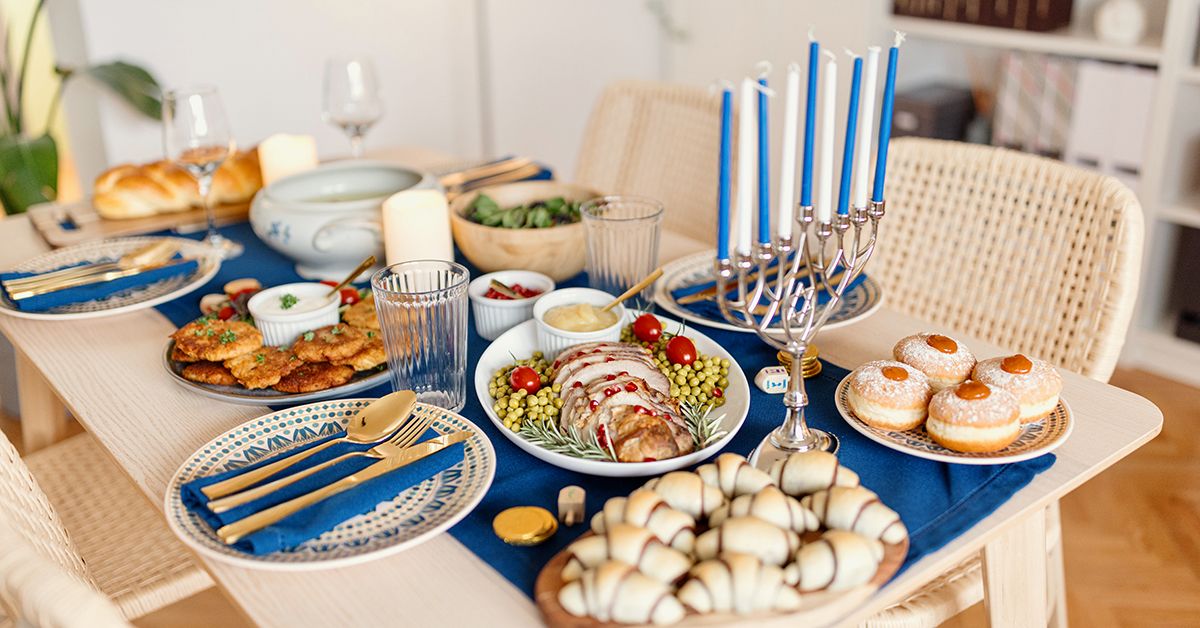
Pro-Tip: Use a standard 9-inch dinner plate. Research shows that using larger plates often leads to overserving, while a smaller plate helps with natural portion management by making the meal look more substantial.
Strategy 3: Master Healthy Hanukkah Food Swaps
You do not have to abandon tradition to improve the nutritional profile of your menu. Smart culinary substitutions can significantly reduce the intake of saturated fat and refined sugars while actually adding beneficial nutrients.
The most iconic dish, the latke, is traditionally made with white potatoes. While delicious, potatoes have a high glycemic index. By utilizing healthy hanukkah food swaps and substitutions, you can lower the carbohydrate load. Consider mixing grated zucchini, carrots, or cauliflower with a smaller amount of potato. Not only does this increase the vitamin content, but it also adds a lovely complexity to the flavor profile.
| Traditional Ingredient | Healthy Alternative | Benefit |
|---|---|---|
| White Potato Latkes | Zucchini or Cauliflower Latkes | Lower glycemic load and higher fiber |
| Sour Cream Topping | Plain Greek Yogurt | Higher protein and lower saturated fat |
| Sweetened Applesauce | Unsweetened applesauce | Zero added refined sugars |
| White Flour (Challah) | Whole-grain or Spelt Flour | Increases dietary fiber for better digestion |
| Vegetable Oil Blends | Extra Virgin Olive Oil | Rich in heart-healthy monounsaturated fats |
Using unsweetened applesauce is one of the simplest healthy hanukkah food swaps you can make. Many commercial applesauces are loaded with high-fructose corn syrup, which can spike blood sugar. Switching to a natural version provides the same tart sweetness with a much better nutritional profile. Additionally, swapping the standard sour cream for Greek yogurt provides a creamy texture along with a boost of probiotics and protein.
Strategy 4: Optimize Cooking Methods (Air Fryer vs. Deep Frying)
The miracle of the oil is central to the holiday, but that doesn't mean our food must be saturated in it. Traditional deep-frying involves submerging food in oil at high temperatures, which can lead to the formation of inflammatory compounds and significantly increases the calorie count.
For a Healthy Hanukkah, consider using an air fryer. This appliance uses hot air circulation to achieve that coveted crispy texture with only a fraction of the oil. Air frying can reduce the total fat content of latkes by up to 70% compared to deep frying. If you prefer the oven, baking latkes on a wire rack allows the heat to circulate, providing a similar crunch without the grease.
When you do use oil, choose wisely. While many people reach for canola or vegetable oil, using olive oil is a beautiful way to honor the holiday’s history while providing heart-healthy fats. Olive oil is rich in antioxidants and monounsaturated fats, which are far superior for cardiovascular health than the saturated fat found in animal-based fats. This method also works for sweets; exploring low sugar sufganiyot alternatives for hanukkah often involves baking the dough rather than frying it, then filling the centers with fresh fruit compote instead of high-sugar jellies.
Strategy 5: Incorporate Postprandial Movement
One of the most effective, yet overlooked, tools for maintaining wellness during the holidays is postprandial movement—simply put, moving your body after a meal. When we eat, our blood sugar levels rise. By engaging in light physical activity shortly after eating, our muscles use that glucose for energy, which significantly blunts the spike in blood sugar.
A short 10 to 15-minute walk after a festive dinner can make a world of difference for your metabolic health. Instead of moving directly from the dinner table to the couch, suggest a family "Menorah walk" around the neighborhood to look at holiday lights. This practice is a cornerstone for those walking after meals to stay healthy during hanukkah.
Science shows that even a brief stroll can improve your glycemic response more effectively than a long workout performed hours later. It aids digestion, reduces that "too full" feeling, and provides a wonderful opportunity for continued connection with family and friends away from the distractions of the kitchen.
Strategy 6: Navigate Social Pressure with Mindful Strategies
Holiday gatherings often come with a side of social pressure. Whether it is a well-meaning relative urging you to have a third helping or the sheer abundance of food at a party, staying on track requires a plan. Utilizing mindful eating strategies for jewish holiday parties can help you enjoy the event without the post-celebration regret.
Before heading to a party, try using the 1-10 hunger scale. Aim to start your meal when you are at a 3 or 4 (hungry but not starving) and stop when you are at a 6 or 7 (satisfied but not stuffed). When we arrive at a party ravenous, our ability to make intentional food choices disappears, and we are much more likely to overeat.
Another tip is to be the person who brings a healthy dish. If you know the menu will be heavy on fried items, bring a large tray of roasted vegetables or a vibrant salad. This ensures there is at least one nutrient-dense option you can rely on. Remember, you can honor the holiday and the host's hospitality by taking small portions of many things rather than large portions of everything. Wellness is about balance, not perfection.
FAQ
How can I make Hanukkah meals healthier?
Making meals healthier involves a combination of ingredient swaps and cooking techniques. Focus on increasing fiber by adding more vegetables to traditional recipes, such as using zucchini in latkes. Choose healthier fats like olive oil and opt for cooking methods like air-frying or baking instead of deep-frying to reduce calorie and fat intake.
What are some healthy alternatives to traditional latkes?
Healthy alternatives include using non-starchy vegetables like cauliflower, broccoli, or zucchini as the base instead of white potatoes. You can also mix in some sweet potato for a lower-glycemic option. Serving them with plain Greek yogurt instead of sour cream and unsweetened applesauce also improves the nutritional profile.
How do I avoid weight gain during the eight days of Hanukkah?
Avoiding weight gain is best managed through portion control and staying active. Utilize the 50/30/20 plate method to ensure you are filling up on vegetables and protein first. Incorporating postprandial movement, such as a short walk after your holiday dinner, helps your body process sugars more efficiently and prevents excess fat storage.
What are the best healthy oils for Hanukkah cooking?
Extra virgin olive oil is the best choice for Hanukkah cooking. It is rich in monounsaturated fats and antioxidants, making it a heart-healthy option that aligns with the traditional theme of the holiday. Avoid using butter or highly refined vegetable oil blends that are high in inflammatory omega-6 fatty acids or saturated fats.
How can I practice portion control during Hanukkah celebrations?
Practice portion control by using smaller plates and being mindful of your hunger cues. Try the "one-plate rule" at parties, where you fill your plate once with a balance of protein, fiber, and one or two treats, rather than going back for multiple helpings. Slowing down your eating and savoring each bite also gives your brain time to register fullness.